Download the star tracking chart
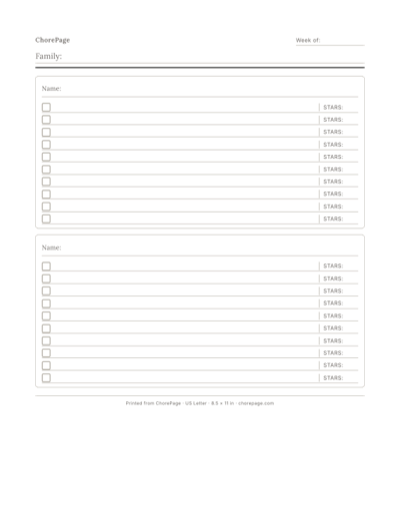
A blank weekly chart with space to record stars by hand.
Home / Allowance and chores: what should kids get paid for?
It is usually best to separate family responsibilities from paid extras. Some chores are part of living in the house. Paid chores work best when they are optional, above the normal baseline, and clearly priced before work starts.
A blank weekly chart with space to record stars by hand.
Allowance can teach money. Chores teach contribution. Those are related, but they are not the same thing.
| Type of work | Examples | Pay? |
|---|---|---|
| Personal responsibility | Hamper clothes, backpack away, make bed | Usually no. |
| Family responsibility | Clear table, unload dishwasher, trash | Usually no. |
| Paid extra | Wash car, weed a garden bed | Maybe, if agreed first. |
Paid chores can help when regular responsibilities are known, the job is extra, the amount is set first, and the finished standard is visible.
Choreeo keeps the kid-facing part on paper. Grown-ups use Choreeo on the web to save names and habits, share turns, and edit the chart before reprinting. Kids do not need another screen.
Use the free PDF by hand, or let Choreeo make a personalized chart with shared turns and each kid’s habits.
Make your family’s chartIt can be, but it does not have to be. Many families keep allowance separate so kids can learn money habits without making every responsibility paid work.
Personal care and ordinary family responsibilities usually should not be paid.
Not in Choreeo house style. Stars are tracking. They help everyone see what happened during the week.